English
 русский
 Français
 Español
 Indonesia
 Deutsch
 عربى
عربى 中文简体
中文简体
Autoclave Liquid Cycle: Complete Guide to Safe Liquid Sterilization | JIBIMED
Posted by Admin | 18 Mar
Content
- 1 What Is an Autoclave Liquid Cycle?
- 2 How the Autoclave Liquid Cycle Works: Phase by Phase
- 3 Liquid Cycle vs. Gravity vs. Pre-Vacuum: Key Differences
- 4 What Can — and Cannot — Be Processed in a Liquid Cycle
- 5 Critical Parameters for a Successful Liquid Cycle
- 6 Autoclave Liquid Cycle Validation and Monitoring
- 7 Common Liquid Cycle Problems and How to Solve Them
- 8 Choosing the Right Autoclave for Liquid Sterilization
What Is an Autoclave Liquid Cycle?
An autoclave liquid cycle — also called a slow exhaust or liquid sterilization cycle — is a specially designed steam sterilization program used to process aqueous solutions, broths, culture media, and other fluid-filled containers. Unlike standard wrapped-instrument cycles, the liquid cycle uses a controlled, gradual pressure release at the end to prevent boiling over or container rupture.
When liquids are heated under pressure inside an autoclave chamber, the temperature of the solution rises above its atmospheric boiling point. If pressure drops too rapidly at cycle completion, the superheated liquid will violently boil — a phenomenon known as "bumping" — potentially shattering glass bottles and contaminating the chamber. The liquid cycle prevents this by slowly venting steam and equalizing pressure before the chamber door can be opened.
How the Autoclave Liquid Cycle Works: Phase by Phase
A standard autoclave liquid cycle proceeds through four distinct phases. Understanding each phase helps operators optimize load configuration and reduce the risk of sterilization failure.
Phase 1 — Conditioning (Heat-Up)
Steam is introduced into the chamber. Because liquid loads have high thermal mass, this phase takes considerably longer than for wrapped instruments. Air removal in liquid cycles is typically achieved by gravity displacement — steam is heavier than air and progressively pushes air downward and out through a drain — rather than by pulsating vacuum, which would cause liquid to boil prematurely.
Phase 2 — Sterilization (Exposure)
Once the chamber reaches the set temperature — typically 121 °C (250 °F) at 15 psi or 132 °C (270 °F) at 27 psi — the exposure timer begins. For a 121 °C cycle, a minimum hold time of 15–30 minutes is standard for most liquid volumes, though larger containers require extended exposure to ensure the solution core reaches sterilizing temperature. Biological indicators (e.g., Geobacillus stearothermophilus spores) are used for routine validation of this phase.
Phase 3 — Exhaust (Slow Depressurization)
This is the defining feature of the liquid cycle. Instead of a fast exhaust, the autoclave vents steam slowly — typically over 10 to 25 minutes — allowing chamber pressure and solution temperature to decrease together. This controlled cooldown keeps the liquid below its local boiling point at each moment, preventing violent phase changes. Some advanced autoclaves use a programmable ramp rate to further customize this phase based on container type and fill volume.
Phase 4 — Door Release and Cooling
Once pressure returns to atmospheric, the door interlock releases. Even at this point, liquid temperatures commonly remain above 80–90 °C. Operators should use insulated gloves and allow bottles to cool on a stable, insulated surface — never on cold metal — to avoid thermal shock fracture of glass containers.
Liquid Cycle vs. Gravity vs. Pre-Vacuum: Key Differences
Choosing the wrong cycle type for a liquid load is one of the most common errors in autoclave operation. The table below summarizes the key differences:
| Cycle Type | Air Removal Method | Exhaust Speed | Suitable for Liquids? |
|---|---|---|---|
| Liquid / Slow Exhaust | Gravity displacement | Slow (10–25 min) | Yes |
| Gravity (Fast Exhaust) | Gravity displacement | Fast (<2 min) | Risk of boiling |
| Pre-Vacuum / Pulsating Vacuum | Vacuum pulses | Fast | Causes boiling / container damage |
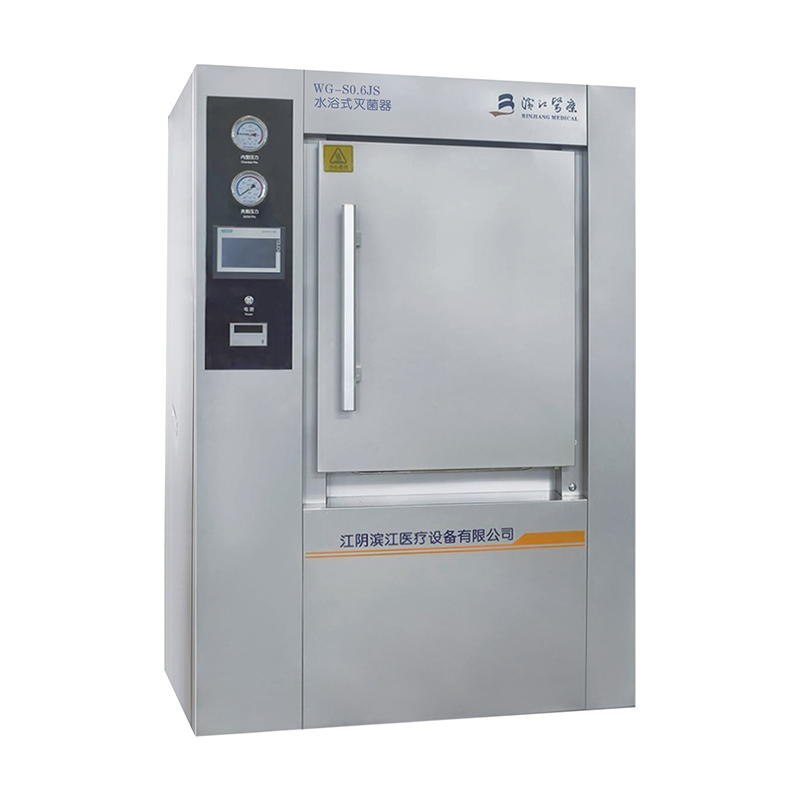
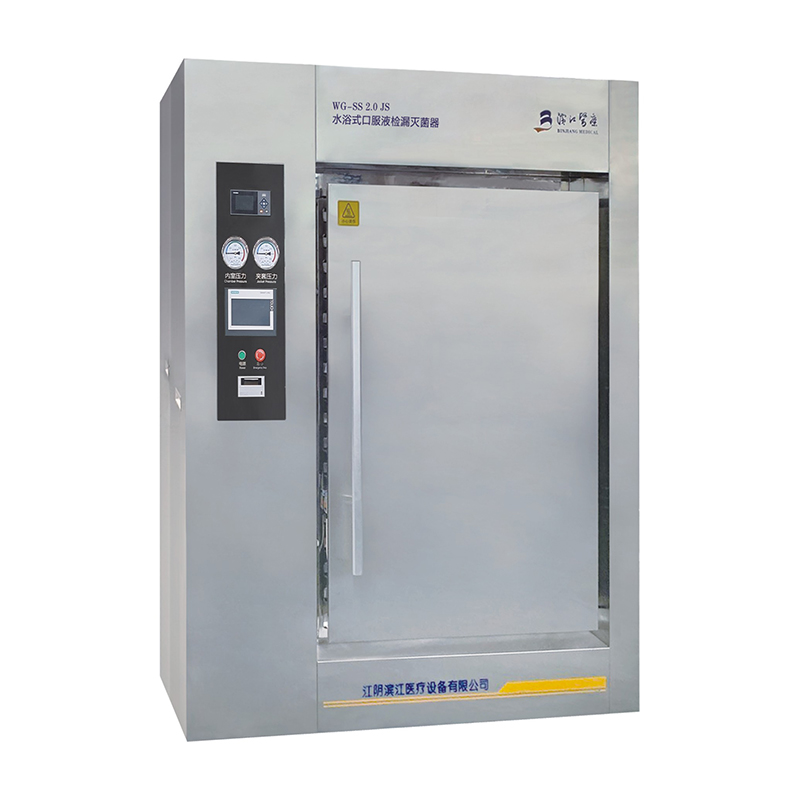
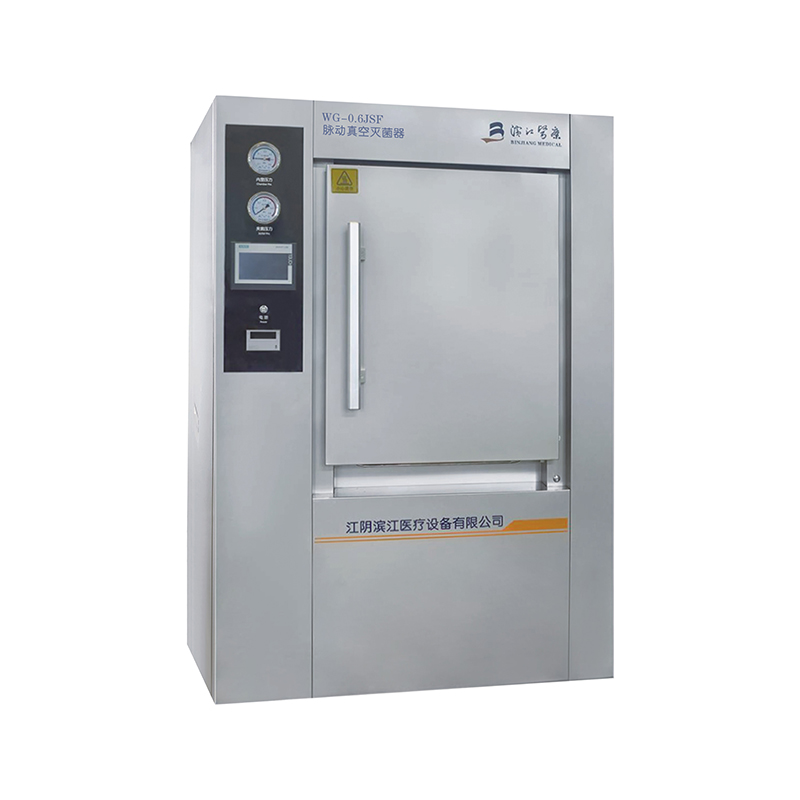
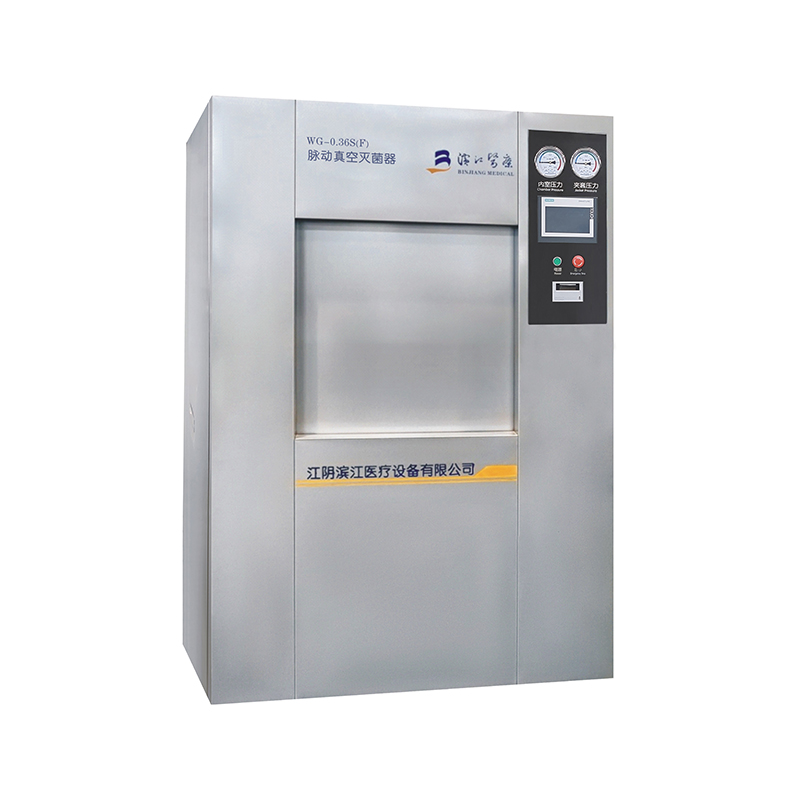
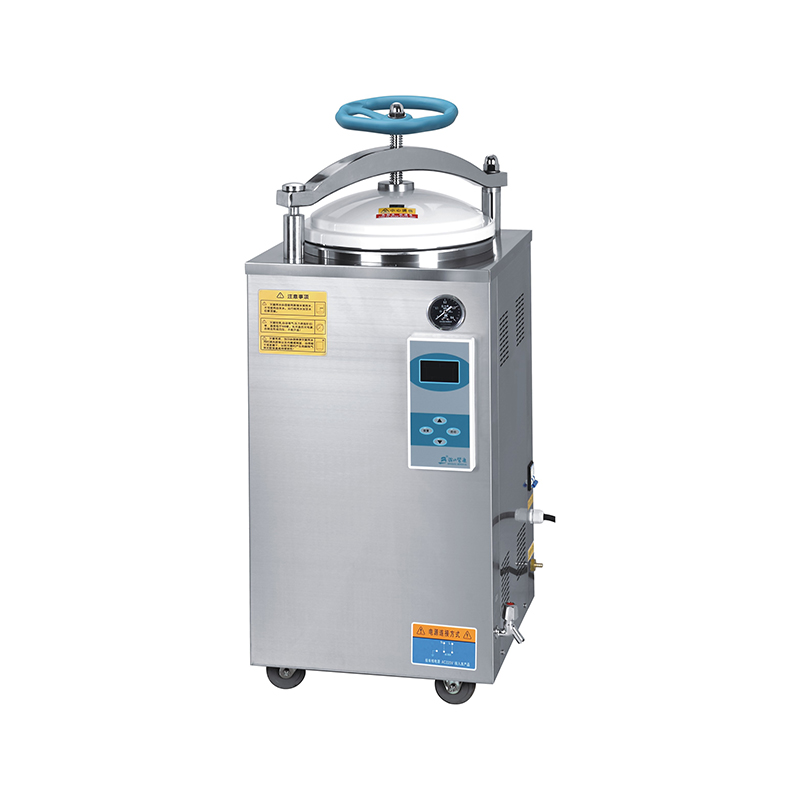
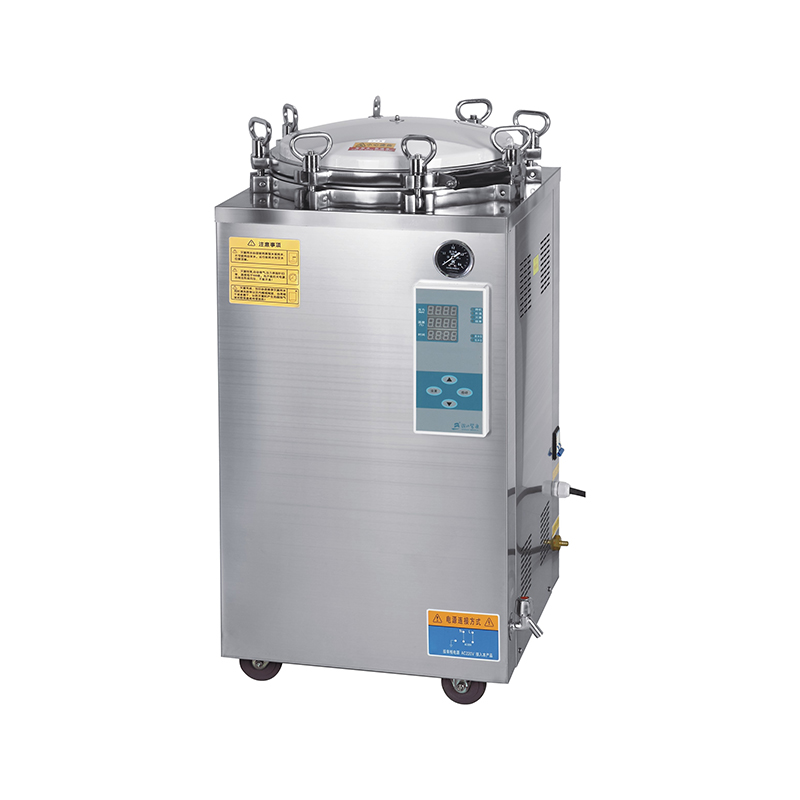
JIBIMED's WG Series Pulse Vacuum Autoclaves offer both pulsating vacuum programs for instrument loads and dedicated liquid programs, allowing facilities to safely process diverse load types on a single platform.
What Can — and Cannot — Be Processed in a Liquid Cycle
Suitable for Liquid Autoclave Cycles
- Microbiological culture media (LB broth, agar, PBS, saline)
- Parenteral solutions in sealed glass ampoules or vials (pharmaceutical grade)
- Liquid waste from biohazard containment labs
- Water for injection (WFI) and irrigation fluids in partially closed containers
- Oral liquid products in glass or heat-stable plastic bottles
Not Suitable for Liquid Autoclave Cycles
- Flammable or volatile solvents (ethanol, methanol, acetone) — explosion hazard
- Chlorine-based solutions — corrosive to chamber components
- Heat-sensitive proteins, enzymes, or biologics that denature above 60 °C
- Fully sealed rigid containers with no pressure-equalizing vent
Critical Parameters for a Successful Liquid Cycle
Sterilization efficacy in a liquid cycle is governed by three interdependent variables — time, temperature, and steam quality. Operators must also account for load-specific factors:
- Container fill level: Never fill bottles more than 75% of their capacity. Headspace allows for expansion and prevents seal failure.
- Container closure type: Use vented closures (e.g., loosened caps, autoclave-safe foil covers) to allow steam pressure equilibration without container rupture.
- Load volume and thermal mass: Larger total liquid volumes require extended exposure times. A single 1 L bottle sterilizes faster than a full rack of 1 L bottles at the same nominal temperature.
- Exhaust rate programming: Match the slow exhaust duration to the liquid volume. Under-programming the exhaust phase — especially for large volumes — is the leading cause of liquid cycle failures and boil-overs.
- Steam quality: Non-condensable gases in steam reduce heat transfer and can create cold spots. Use purified or WFI-quality water in steam generators to minimize this risk.
Autoclave Liquid Cycle Validation and Monitoring
Regulatory bodies including the FDA, EU GMP, and ISO 17665 require that autoclave liquid cycles used in pharmaceutical and medical device manufacturing be formally validated. A compliant validation protocol typically includes:
- Installation Qualification (IQ): Verifying that the autoclave is installed correctly per manufacturer specifications.
- Operational Qualification (OQ): Confirming that the cycle reaches and maintains set temperature and pressure across the chamber.
- Performance Qualification (PQ): Demonstrating that the cycle achieves a minimum Sterility Assurance Level (SAL) of 10⁻⁶ under worst-case load conditions, using biological and chemical indicators.
- Routine monitoring: Each liquid cycle run should be accompanied by time-temperature recorder charts, chemical indicators placed inside representative containers, and periodic biological indicator testing.
JIBIMED autoclaves feature built-in data logging and print-out capabilities, supporting documentation requirements for GMP-regulated liquid sterilization workflows in pharmaceutical and laboratory environments.
Common Liquid Cycle Problems and How to Solve Them
Problem 1: Liquid Boiling Over or Bottle Breakage
Usually caused by too rapid an exhaust phase or an overfilled container. Solution: extend the slow exhaust time, reduce fill volume to ≤75%, and ensure containers have pressure-equalizing vents.
Problem 2: Incomplete Sterilization (Failed Biological Indicator)
Often caused by air pockets in the liquid, insufficient exposure time, or overloaded chamber. Solution: use gravity-cycle-compatible containers that allow steam contact, extend exposure time for large-volume loads, and avoid stacking containers in ways that restrict steam circulation.
Problem 3: Discoloration or Precipitation in Sterilized Media
Overheating sensitive culture media (especially those containing sugars) can cause caramelization or precipitation. Solution: use the lowest effective sterilization temperature (121 °C rather than 134 °C) and validate that media quality is maintained post-cycle with sterility and growth promotion testing.
Choosing the Right Autoclave for Liquid Sterilization
Not all autoclaves are equally suited for routine liquid cycle work. When selecting equipment for liquid sterilization, key criteria include: a programmable slow-exhaust phase with adjustable ramp rate, integrated temperature probes for liquid load monitoring, stainless steel chamber surfaces resistant to condensate corrosion, and a validated cycle library that includes liquid programs compliant with applicable pharmacopeial standards.
Jiangyin Binjiang Medical Equipment Co., Ltd. (JIBIMED) designs pressure steam sterilizers purpose-built for diverse load types, including dedicated liquid programs for hospitals, pharmaceutical manufacturers, and research laboratories. With decades of engineering expertise and certifications meeting international quality standards, JIBIMED autoclaves provide the cycle flexibility, data traceability, and operational reliability that safe liquid sterilization demands.