English
 русский
 Français
 Español
 Indonesia
 Deutsch
 عربى
عربى 中文简体
中文简体
Pass Through Autoclave: How It Works and Why It Matters
Posted by Admin | 28 Feb
Content
- 1 What Is a Pass Through Autoclave?
- 2 How a Pass Through Autoclave Works
- 3 Key Applications and Industries
- 4 Types of Pass Through Autoclaves
- 5 Door Interlock Systems: The Safety Core
- 6 Installation Considerations
- 7 Validation and Qualification Requirements
- 8 Maintenance and Common Failure Points
- 9 Best Practices for Daily Operation
- 10 Choosing the Right Pass Through Autoclave
What Is a Pass Through Autoclave?
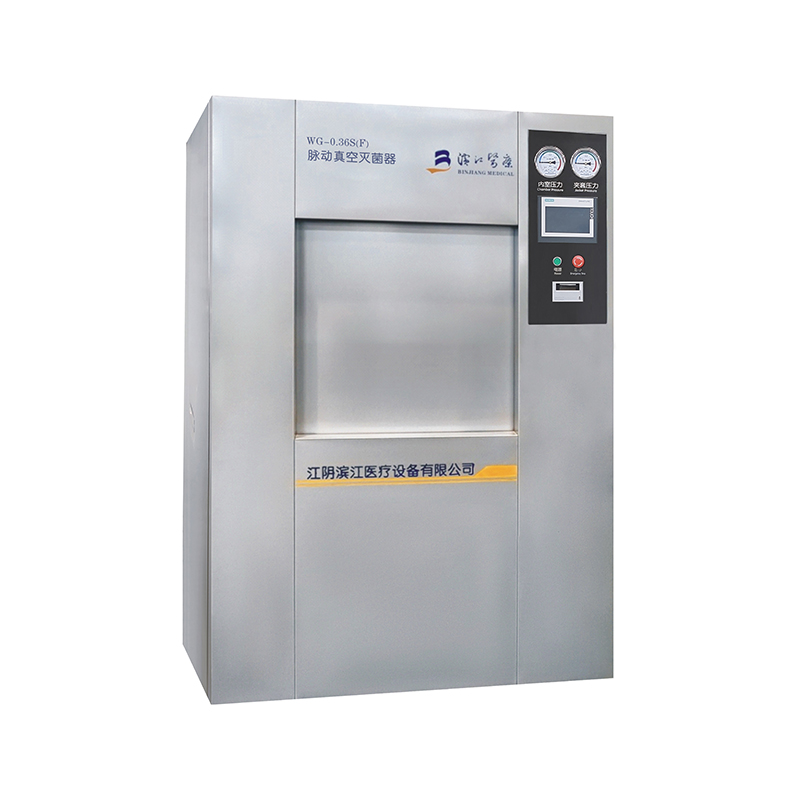
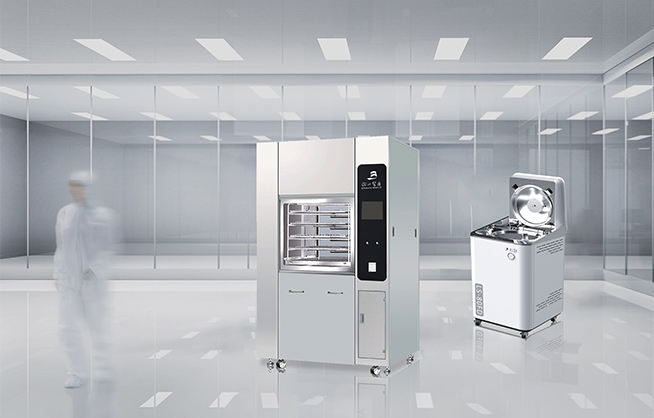
A pass through autoclave is a steam sterilization unit installed between two separate areas — typically a contaminated zone and a clean or sterile zone — allowing materials to be loaded on one side and unloaded on the other without cross-contamination. This design is essential in hospitals, pharmaceutical manufacturing, biosafety laboratories, and cleanrooms where maintaining strict separation between dirty and sterile environments is non-negotiable.
Unlike a standard single-door autoclave, a pass through model features two interlocked doors — one on the soiled side and one on the clean side — that cannot be opened simultaneously. This mechanical or electronic interlock is the core safety feature that prevents contaminated air or materials from bypassing the sterilization cycle and entering the clean area.
How a Pass Through Autoclave Works
The operating principle follows a straightforward sequence that ensures complete decontamination before any material crosses the environmental barrier:
- An operator on the contaminated side opens the loading door and places items — surgical instruments, lab waste, media, or equipment — inside the chamber.
- The loading door is closed and sealed. The interlock immediately prevents the clean-side door from being opened.
- The sterilization cycle begins: the chamber is evacuated of air, saturated steam is introduced at temperatures typically between 121°C and 134°C, and pressure is maintained for a validated hold time (commonly 15–30 minutes depending on load type).
- After the cycle completes, the chamber exhausts and dries the load. Cycle completion is confirmed by the control system.
- Only then does the interlock release, allowing the clean-side operator to open the unloading door and retrieve the sterilized items.
This one-directional workflow is what makes the pass through autoclave fundamentally different from moving materials through an airlock or manual transfer — the sterilization step is built directly into the transfer process.
Key Applications and Industries
Pass through autoclaves are deployed wherever the boundary between a contaminated and a controlled environment must be physically enforced:
- Hospital central sterile departments (CSSD): Reprocessing surgical instruments from the operating theater to the sterile supply room.
- Pharmaceutical and biotech manufacturing: Sterilizing media, containers, and equipment entering ISO-classified cleanrooms, such as ISO 5 or ISO 7 environments.
- BSL-3 and BSL-4 laboratories: Decontaminating waste and materials before they leave high-containment zones. In BSL-4 facilities, the pass through autoclave is a regulatory requirement, not just best practice.
- Animal research facilities: Moving sterilized bedding, feed, and caging into barrier-protected animal rooms.
- Food and beverage production: Sterilizing packaging materials before entry into aseptic filling areas.
Types of Pass Through Autoclaves
Not all pass through autoclaves are built the same. Choosing the right type depends on the application, throughput, and regulatory environment.
Gravity Displacement vs. Pre-Vacuum (Vacuum-Assisted)
Gravity displacement autoclaves rely on steam pushing air out from the bottom of the chamber. They are suitable for unwrapped instruments and liquids but are not effective for porous loads or complex instrument trays. Pre-vacuum (Class B) autoclaves use one or more vacuum pulses before sterilization to remove air from porous items and hollow instruments, achieving far more reliable steam penetration. For most healthcare and pharmaceutical applications, pre-vacuum models are strongly preferred.
Rectangular vs. Circular Chamber
Rectangular chambers allow more efficient loading of standardized sterilization trays and baskets. Circular chambers are mechanically simpler and typically lower cost, but are less space-efficient. High-throughput hospital and industrial settings almost always choose rectangular pass through configurations.
Wall-Mounted vs. Floor-Standing Models
Smaller pass through autoclaves (typically under 100 liters) can be wall-mounted into a partition, making them ideal for cleanroom entry points where floor space is critical. Larger units (200–1,000+ liters) are floor-standing and often installed during facility construction since they must be structurally integrated into the wall separating the two zones.
| Type | Best For | Air Removal | Typical Volume |
|---|---|---|---|
| Gravity Displacement | Liquids, unwrapped metal | Passive | 20–200 L |
| Pre-Vacuum (Class B) | Porous loads, wrapped instruments | Active vacuum pulses | 50–1,000+ L |
| Wall-Mounted | Cleanroom entry, low-volume use | Either | 20–100 L |
| Floor-Standing | High-throughput industrial or hospital | Active vacuum pulses | 200–2,000+ L |
Door Interlock Systems: The Safety Core
The interlock system is what separates a pass through autoclave from simply installing two doors on a regular unit. Interlocks may be:
- Mechanical interlocks: A physical latch or bar that prevents both doors from opening simultaneously. Simple and fail-safe, but less flexible for automated systems.
- Electronic interlocks: Controlled by the autoclave's programmable logic controller (PLC). The clean-side door is unlocked only after cycle completion is confirmed by sensors and logged by the system. Provides a full audit trail.
- Combination systems: Electronic control with a mechanical backup, required in many BSL-3/4 and GMP-regulated environments.
Regulatory standards such as EN 285 (European large steam sterilizers), HTM 01-01 (UK healthcare), and CDC/NIH biosafety guidelines all specify requirements for interlock reliability and cycle validation in pass through applications.
Installation Considerations
Installing a pass through autoclave is significantly more complex than placing a standard unit because it must form part of the building envelope between two controlled areas. Critical planning factors include:
Wall Penetration and Sealing
The autoclave must be sealed into the wall with no air gap between the chamber body and the partition. In cleanroom or containment applications, this seal must meet the same integrity standard as the wall itself — often validated with smoke or pressure differential testing after installation.
Pressure Differential Compatibility
In facilities where the clean side is maintained at positive pressure (e.g., pharmaceutical cleanrooms) or the contaminated side at negative pressure (e.g., BSL-3 labs), the autoclave chamber and door seals must be able to withstand these differential pressures without allowing airflow through the unit when idle.
Utility Access
Pass through autoclaves require steam supply, water (for cooling and condensate), electrical power, compressed air (for door actuators), and drain connections. Because the unit spans two zones, utility routing must be carefully planned to avoid breaching the environmental barrier. All utilities should ideally be accessible from the dirty side to avoid maintenance personnel entering the clean zone.
Validation and Qualification Requirements
In regulated industries, a pass through autoclave is not simply purchased and used — it must be formally qualified before it can process product or patient-critical items. The standard qualification approach follows IQ/OQ/PQ:
- Installation Qualification (IQ): Confirms the unit is installed according to specifications, including utility connections, calibration records, and documentation.
- Operational Qualification (OQ): Verifies the unit performs as intended across its operating range — testing temperature uniformity, pressure profiles, interlock function, and alarm responses.
- Performance Qualification (PQ): Demonstrates consistent sterilization of actual or representative loads under production conditions, including biological indicator (BI) testing using Geobacillus stearothermophilus spores — the most resistant organism to moist heat sterilization.
Revalidation is typically required annually and after any significant maintenance, repair, or process change. The FDA's 21 CFR Part 11 requirements also apply to electronic records and audit trails generated by modern autoclave control systems in pharmaceutical settings.
Maintenance and Common Failure Points
Preventive maintenance is critical because a failed pass through autoclave can either halt operations or — worse — pass inadequately sterilized materials into a clean zone without detection. The most common failure points are:
- Door gaskets and seals: Repeated thermal cycling causes elastomer seals to harden and crack. Inspect and replace on a scheduled basis — typically every 6–12 months in high-use settings.
- Steam traps and filters: Blocked steam traps cause wet loads and inconsistent cycle temperatures. Weekly or monthly checks depending on water quality and cycle frequency.
- Interlock mechanism: Electronic sensors and solenoids can fail, either preventing the clean-side door from opening (operational issue) or — in the worst case — allowing it to open prematurely (safety issue). Functional testing should be part of every scheduled PM.
- Temperature sensors and probes: Drift in thermocouple or RTD readings can cause cycles to run at sub-lethal temperatures without triggering alarms. Annual calibration against a traceable standard is a minimum requirement.
- Chamber corrosion: Mineral deposits from feedwater, combined with condensate chemistry, can cause pitting in stainless steel chambers over time. Using feedwater that meets EN 285 or AAMI TIR34 standards significantly extends chamber lifespan.
Best Practices for Daily Operation
Even a properly installed and validated pass through autoclave can underperform if operational best practices are not followed consistently:
- Never overload the chamber. Overloading reduces steam circulation and can create cold spots where sterilization may be inadequate. Follow the maximum load density specified in the validated cycle.
- Use correct packaging. Items must be wrapped or contained in materials compatible with steam sterilization (e.g., SMS non-woven wraps or sterilization pouches). Dense or impermeable packaging blocks steam penetration.
- Run a daily Bowie-Dick test (for pre-vacuum autoclaves) to confirm air removal performance before the first load of the day.
- Include chemical indicators (Class 5 or Class 6 integrators) with every load, and biological indicators at the validated frequency (often weekly in hospital settings, or per batch in pharma).
- Document every cycle. Modern autoclaves produce a printed or electronic cycle record; this record must be reviewed and retained as evidence of sterilization for the items processed.
- Never force open a door if the interlock has not released. Investigate and resolve the cause before proceeding.
Choosing the Right Pass Through Autoclave
The selection process should begin with a clear understanding of the loads to be processed, the regulatory framework that applies, and the facility constraints. Key questions to answer before specifying a unit:
- What is the maximum load size and daily throughput required?
- Are loads porous, solid, or liquid — or a mixture? (Determines gravity vs. pre-vacuum.)
- What containment level or cleanroom classification applies?
- Is the installation new construction or a retrofit? (Retrofit installations into existing walls are far more complex.)
- What standards must the unit comply with — EN 285, ASME, HTM 01-01, or others?
- Is 21 CFR Part 11-compliant electronic record keeping required?
Engaging a sterilization specialist or validation consultant early in the facility design process avoids costly retrofits and ensures the chosen unit will pass qualification on the first attempt. The cost of a failed validation or a contamination incident far outweighs the investment in getting the specification right from the start.