English
 русский
 Français
 Español
 Indonesia
 Deutsch
 عربى
عربى 中文简体
中文简体
Large Capacity Autoclave Buyer's Guide: Types, Sizing, and Installation
Posted by Admin | 09 Aug
Content
- 1 What Counts as a Large Capacity Autoclave?
- 2 Common Configurations of Large-Capacity Sterilizers
- 3 How to Decide Whether You Actually Need a Large Capacity Autoclave
- 4 Infrastructure Requirements for Large Capacity Autoclaves
- 5 What to Do If You Don't Have Room for a Large Unit
- 6 Key Specifications to Compare Before You Buy
- 7 Start with a Throughput Analysis, Not a Size Target
Your central sterile services department is processing more sets every month, and the hospital's planning committee has proposed a "large capacity autoclave" to end the bottleneck. Before the ceiling is opened or the floor is reinforced, stop and calculate. In this industry, a large capacity autoclave is defined as a sterilizer with a chamber volume above 1,000 liters (roughly 36 cubic feet). That size brings with it a dedicated room, higher steam supply, special drainage, and, in many cases, a pit for loading. The threshold matters less than your shift demand, however: the right decision flows from peak load, cycle time, and available turnaround window, not from a desire to buy the biggest chamber.
What Counts as a Large Capacity Autoclave?
A 100-liter vertical autoclave is normal in laboratories, and a 600-liter horizontal sterilizer can serve a busy operating theater. Neither is considered a large capacity autoclave. The 1,000-liter line is a practical boundary because chambers above it no longer fit through standard hospital corridors in one piece, and they require a structural plan that affects the building itself.
The table below shows how the industry usually groups sterilizers by volume and installation.
| Equipment class | Chamber volume | Typical user | Installation plan |
|---|---|---|---|
| Table-top | Under 100 L | Dental and eye clinics | Bench or mobile cart |
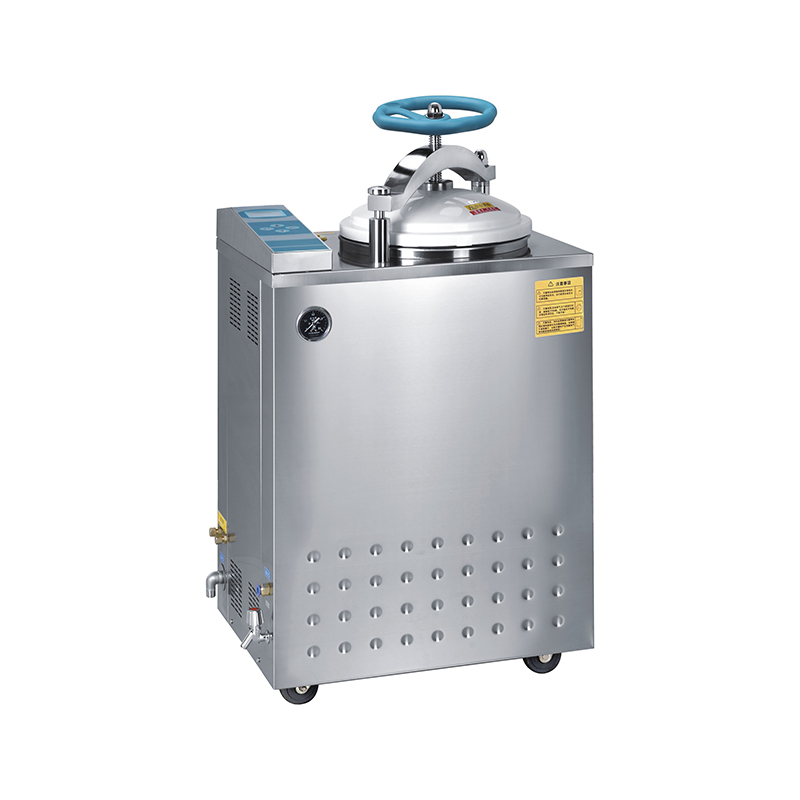
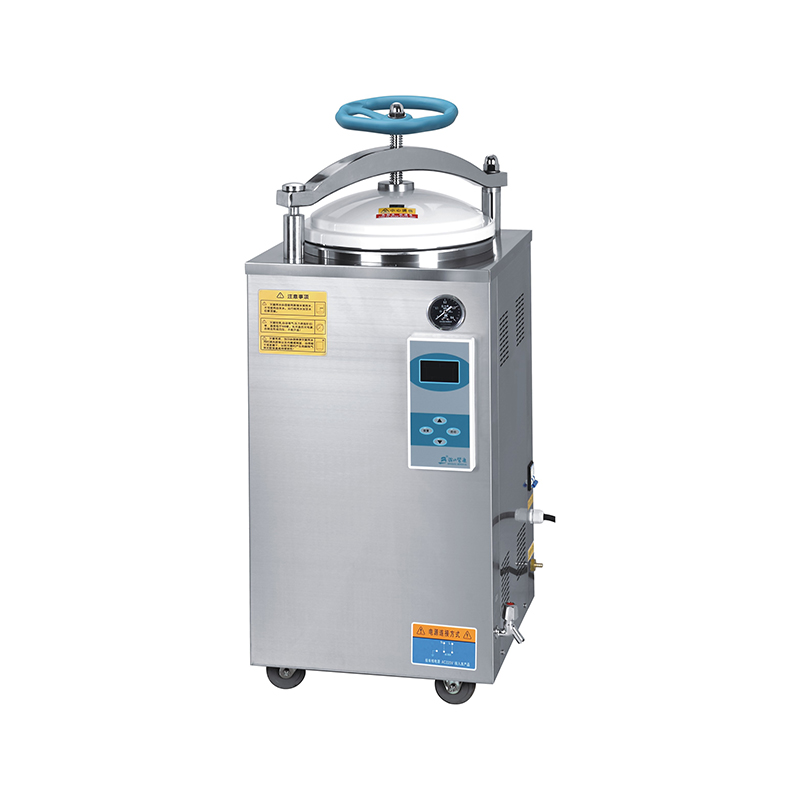
| Vertical | 28-100 L | Laboratories, small practices | Engineered floor, simple utilities |
| Horizontal | 100-800 L | CSSDs, operating departments | Reinforced floor, dedicated steam |
| Large capacity | 1,000 L and above | Regional hospitals, pharmaceutical production | Dedicated room, pit option, heavy utility service |
Common Configurations of Large-Capacity Sterilizers
Once you cross 1,000 liters, the chamber shape is almost always horizontal. That is not a styling choice: a horizontal vessel allows the chamber floor to align with transport carts and makes loading dense, heavy loads much safer. The more important distinction is how the sterilizer manages air.
Gravity-Displacement Designs
Gravity-displacement autoclaves push steam in from the top and push air out through a bottom drain. The mechanism is reliable, inexpensive to maintain, and still common for laboratory waste, glassware, and heat-stable liquids. But gravity units are not the best match for wrapped instrument sets because trapped air can shield pockets of a load from reaching sterilization temperature.
Vacuum-Assisted Designs
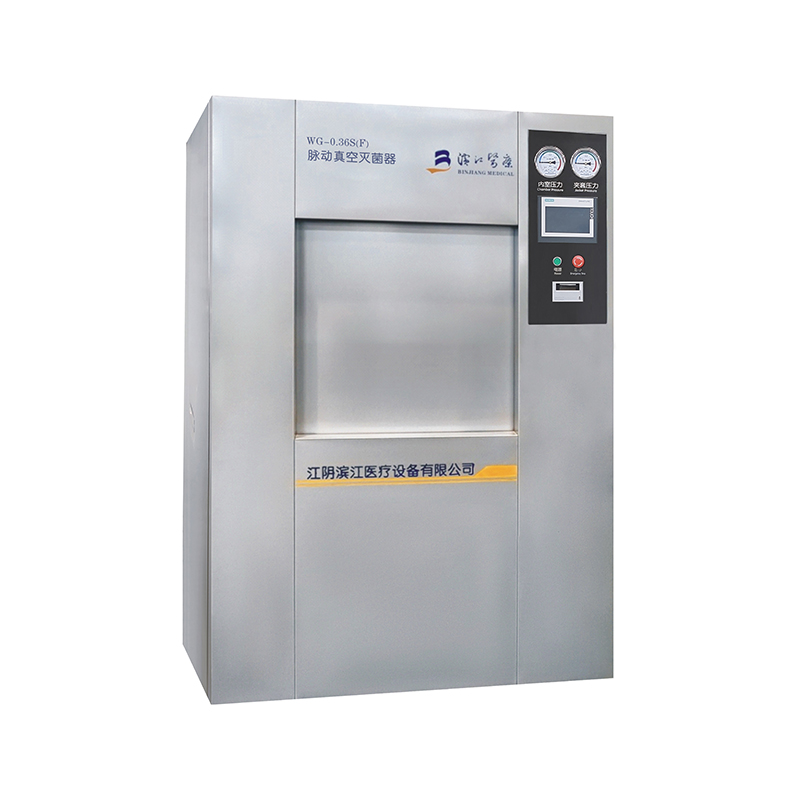
Vacuum-assisted autoclaves remove air before steam enters the chamber, using several pre-vacuum pulses in a process commonly called fractionated pre-vacuum. The result is faster temperature penetration and a more predictable outcome for textiles, rigid containers, and instruments with lumens. For hospital use, a horizontal pulse-vacuum steam sterilizer is often the configuration that meets both capacity and quality requirements.
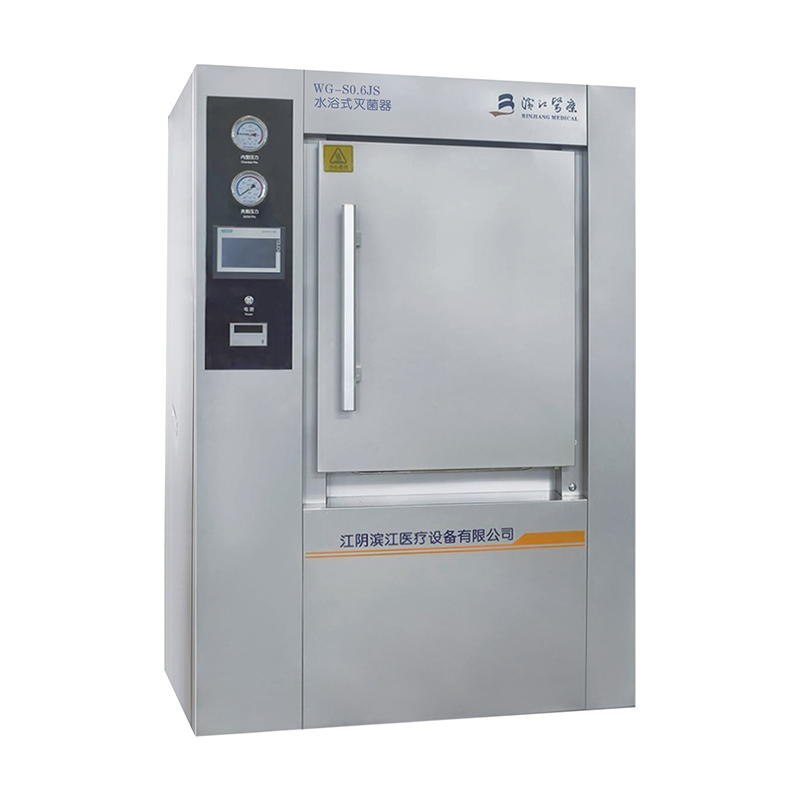
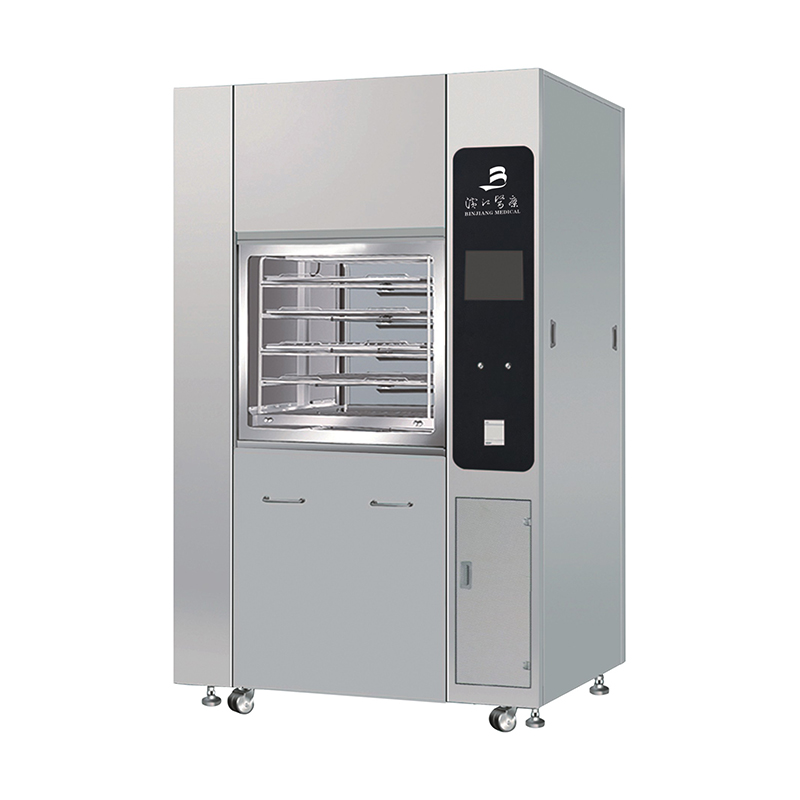
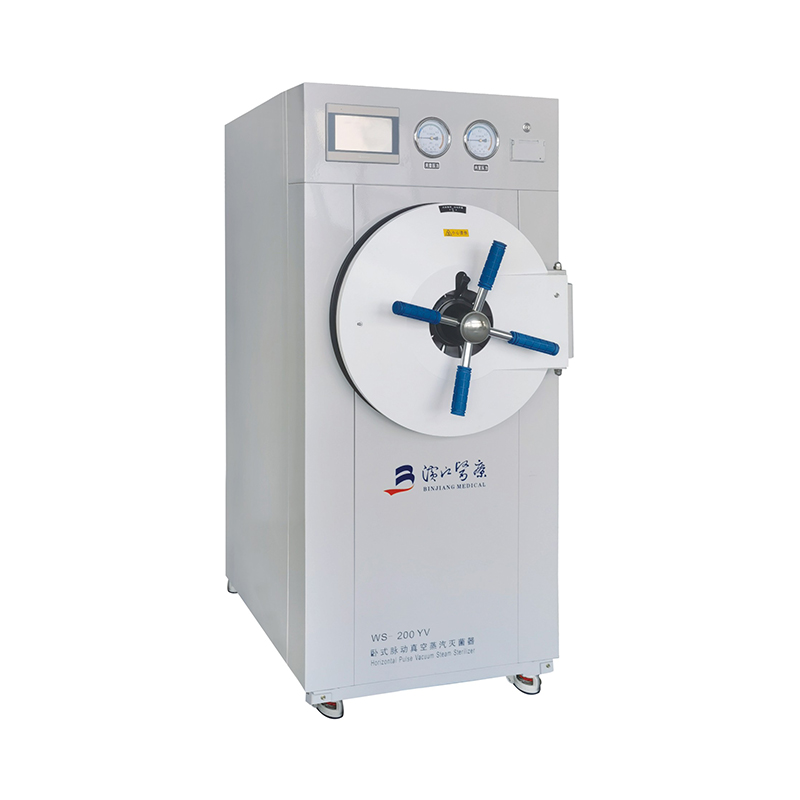 Wholesale Horizontal Pulse Vacuum Steam Sterilizer Suppliers, OEM/ODM Company - Jiangyin Binjiang Medical Equipment Co., Ltd. is China wholesale Horizontal Pulse Vacuum Steam Sterilizer suppliers and OEM/ODM company, ...View Product →
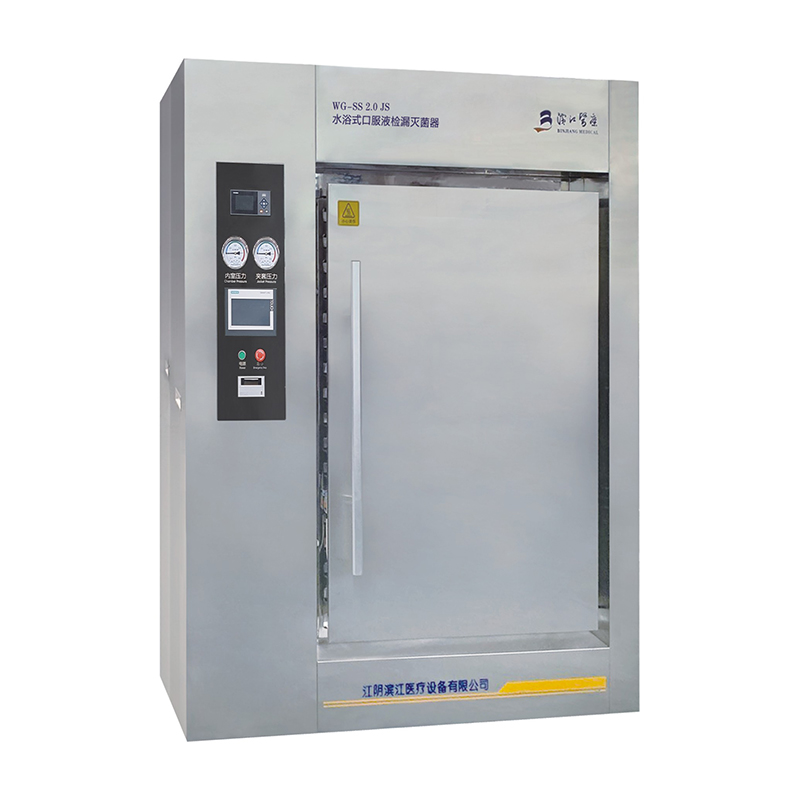
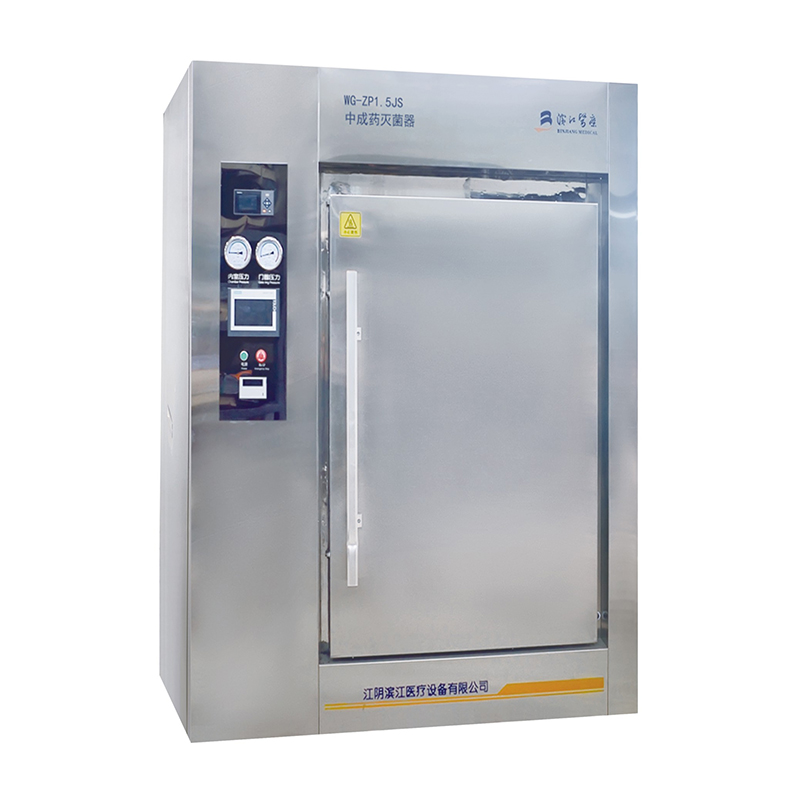
In pharmaceutical and industrial settings, the framing is different. Production sterilizers must handle large batches of sealed containers or heavy product carriers and must produce reproducible data for batch records. Many plants choose an industrial sterilizer such as the WG pulse-vacuum autoclave, which can be built with a lifting door, pass-through design, and programmable cycle recipes.
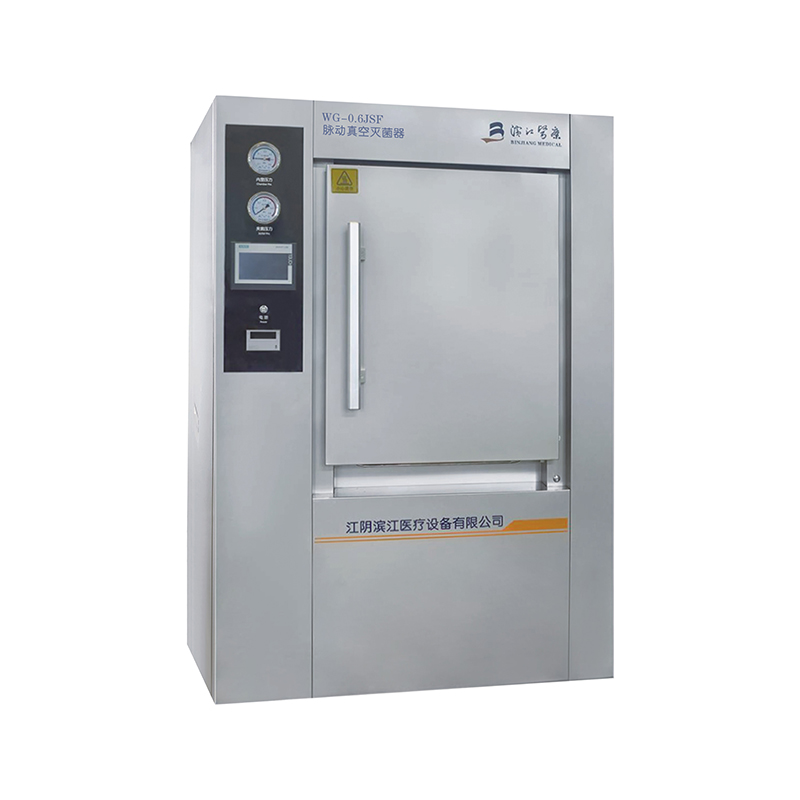 Wholesale WG Pulse Vacuum Autoclave Suppliers, OEM/ODM Company - Jiangyin BinjiaJiangyin Binjiang Medical Equipment Co., Ltd. is China wholesale WG Pulse Vacuum Autoclave suppliers and OEM/ODM company, details: WG se...View Product →
How to Decide Whether You Actually Need a Large Capacity Autoclave
The honest answer in many facilities is that they need more cycles, not more liters. Start with the load that has to be sterile by a fixed time, then work backward.
Estimate Your Peak Sterilization Load
List every set, container, bottle, and package that must be available at the same time. If your operating room run begins at 07:00 and the CSSD has 18 wrapped sets to deliver, that is your peak batch. Divide that by the number of standard tray dimensions your hospital uses; this gives the number of loading carts or racks per cycle.
Add Cycle Time, Not Just Chamber Volume
A typical wrapped-instrument cycle at 134°C takes about 8 to 12 minutes of exposure time, but the complete cycle—loading, air removal, heating, sterilization, drying, and cooling—may take 30 to 45 minutes. The useful metric is cycles per hour. A 1,200-liter chamber that cycles once per hour may deliver less throughput than two 600-liter units that cycle alternately, because the smaller units can keep staff and carts moving.
For a modest workload, the calculation may show that a medium-size horizontal sterilizer is sufficient. Many hospitals use a 100-liter horizontal unit as a supplementary device for small sets and instruments that need quick turnaround at off-peak hours. That is a different proposition from a large capacity autoclave, but it often solves the stated problem.
Infrastructure Requirements for Large Capacity Autoclaves
Large capacity autoclaves change the design of the room, not just the equipment budget. A 1,000-liter chamber may weigh several tons when loaded, and a 1,500-liter unit can exceed the floor loading limits of an existing multi-story hospital wing. A pit is often used to keep the loading cart at floor level, which avoids ramps and improves ergonomics but adds civil engineering work.
- Steam support: both supply pressure and generation rate in kg/h must match the chamber's consumption plus the recovery time between cycles.
- Water: feed water quality for steam generation and cooling water for vacuum pumps may require treatment, so you need both a chemical test and a flow calculation.
- Drainage: hot condensate and vacuum pump discharge must cool down before entering the building drain, requiring tempering tanks in some installations.
- Electrical supply: voltage, phase, and continuous power draw determine whether a new transformer or generator circuit is necessary.
- Ventilation: the equipment room must remove steam leakage, moisture, and heat without allowing pressure to build up in the space.
- Door access and service clearances: chamber doors open horizontally or vertically; maintenance needs space behind and above the jacket.
Compare your building's existing conditions with these requirements before you issue a specification. A practical autoclave room design and equipment selection guide covers the civil, electrical, and mechanical points in more detail.
What to Do If You Don't Have Room for a Large Unit
If the pit, steam capacity, or floor loading cannot be justified, do not force a large capacity autoclave into the project. Instead, look at distributed processing: install two horizontal sterilizers in the 300 to 700 liter range, run them on staggered cycles, and keep one available for emergency loads. This gives you redundancy, lets you separate low-temperature and high-temperature loads, and often delivers higher annual throughput than a single large unit, because loading and unloading are parallel processes.
For facilities with a genuine but limited peak load, a single medium sterilizer plus a small companion unit is a common compromise. A 100-liter horizontal pressure steam sterilizer can handle small sets while the larger unit runs the main volume, but it does not replace the capacity of a 1,000-liter chamber.
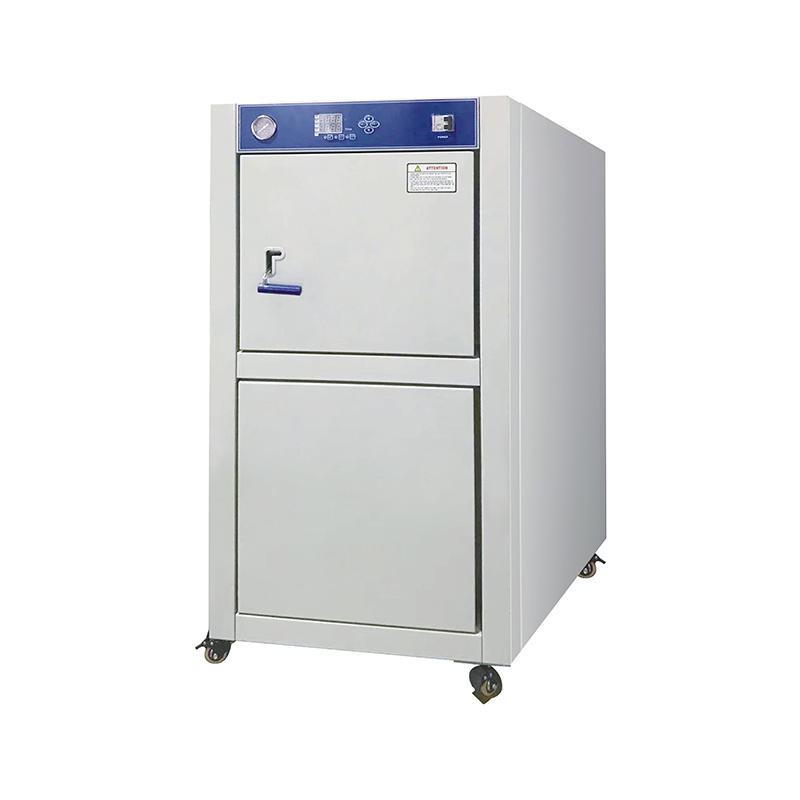 Wholesale 100Liters Horizontal Pressure Steam Sterilizer Suppliers, OEM/ODM CompJiangyin Binjiang Medical Equipment Co., Ltd. is China wholesale 100Liters Horizontal Pressure Steam Sterilizer suppliers and OEM/ODM com...View Product →
Key Specifications to Compare Before You Buy
Once you have shortlisted two or three large capacity autoclaves, compare them on operating parameters rather than only the price per liter.
- Chamber diameter and usable depth: total volume can be misleading if the interior diameter is too small for your largest container.
- Door configuration: hinged doors are cheapest, but sliding or vertical lifting doors save floor space in cramped utility rooms.
- Vacuum performance: check the type of vacuum pump, the number of pre-vacuum pulses, and the leak rate test result.
- Cycle program flexibility: preset national-standard programs are useful, but editable recipes matter when you process unusual loads.
- Data logging: integral printers, USB export, or Ethernet connection to a LIMS affect batch traceability and audit readiness.
- Safety features: door interlocks, over-temperature limits, over-pressure relief, and manual override procedures should be clearly documented.
Ask the manufacturer for a steam-up test or a documented cycle verification report. The performance gap between a high-quality unit and a low-cost unit usually appears in drying efficiency and vacuum integrity, not in the chamber size.
Start with a Throughput Analysis, Not a Size Target
Buying a large capacity autoclave should be the conclusion of a data-based review, not the starting point. Map the peak load, measure the real cycle time, verify your steam and water capacity, and then decide whether one large chamber or two medium chambers is the better investment. A manufacturer that builds both small and large sterilizers can give you an unbiased comparison.
Jiangyin Binjiang Medical Equipment has designed and produced pressure steam sterilizers for more than 25 years, with horizontal, vertical, table-top, and industrial WG-series ranges. Learn more about our company and browse the complete sterilization equipment portfolio. Understanding the difference between need and appetite is part of the purchasing process, and the right chamber size should fit your workflow, not overwhelm it.