English
 русский
 Français
 Español
 Indonesia
 Deutsch
 عربى
عربى 中文简体
中文简体
Water Vapour vs Steam: Why Visibility Matters for Sterilization
Posted by Admin | 27 Jul
Content
The Practical Divide Between Water Vapor and Steam
A kettle boils and a white plume rises from the spout. Most observers call that stuff “steam,” yet a physicist will tell you the visible cloud is already liquid water. The actual gas—invisible and transparent—is water vapor. For facility managers, laboratory technicians, and sterilization operators, this is not a semantic exercise. Treating the visible mist as true steam leads to load wetness, incomplete sterilization, and equipment performance drift. Understanding the boundary between water vapor and steam informs every parameter you set inside an autoclave chamber.
What Is Water Vapor?
Definition and Formation
Water vapor is the gaseous phase of H₂O. It forms when water molecules escape the liquid surface through evaporation or when boiling produces bulk gas beneath the surface. Crucially, water vapor is always colorless and transparent. It exists at temperatures far below the normal boiling point—ambient humidity is nothing more than water vapor dispersed in air. Even ice sublimates directly into water vapor without a visible transition.
In thermodynamic terms, water vapor behaves as any ideal gas at low partial pressures. It occupies a volume roughly 1,600 times greater than the equivalent liquid mass at atmospheric pressure, an expansion that industrial systems harness for energy transfer and cleaning. However, because the gas is invisible, operators frequently underestimate its presence until condensation occurs.
Key Properties
- Temperature range: Water vapor can exist at any temperature above the triple point (0.01°C). It does not require boiling conditions.
- Visibility: Never visible to the naked eye. Any observed “vapor” is actually fine liquid droplets.
- Thermodynamic state: In equilibrium with liquid or ice depending on saturation pressure. Without a constant heat source, water vapor cools rapidly and condenses.
- Moisture content: Measured as relative humidity or specific humidity; an important factor in drying, storage, and HVAC calculations.
What Is Steam?
Definition and Common Misconception
Steam is the gaseous form of water that is produced at or above the boiling point, often under pressure. In engineering, the term refers primarily to the vapor phase, but the everyday “white steam” people see is a two-phase mixture: tiny liquid droplets suspended in true water vapor. This aerosol is technically wet steam and it contains a fraction of water that has already condensed. The confusion between invisible water vapor and visible wet steam is the root cause of many sterilizer load failures because operators rely on sight rather than on physical state verification.
To eliminate ambiguity, technical documentation distinguishes steam by its thermodynamic quality—the mass fraction of vapor in the mixture. A steam quality of 100% means no entrained liquid; 95% means 5% liquid mass. Autoclaves demand quality as close to 100% as possible without entering the superheated region, a point we detail further below.
Types of Steam (Wet, Saturated, Superheated)
| Steam Type | Composition | Typical Temperature | Sterilization Use |
|---|---|---|---|
| Wet (low-quality) steam | Vapor + entrained liquid droplets | Below saturation for given pressure | Poor; causes load wetness and uneven heat transfer |
| Dry saturated steam | 100% vapor at boiling point for that pressure | 121–134°C typical | Ideal; maximum latent heat and penetration |
| Superheated steam | Vapor heated above saturation temperature | Above 134°C, variable | Unsuitable without special design; behaves like hot dry gas |
Dry saturated steam is the workhorse of healthcare and laboratory sterilization. It condenses on cooler load surfaces and instantly releases about 2,260 kJ of latent heat per kilogram—the thermal shock that destroys microbial life. Wet steam dampens loads and interferes with temperature uniformity. Superheated steam lacks the immediate condensation trigger; it must first cool to saturation before effective heat transfer begins, a delay that shortens effective exposure time and may lead to failed biological indicators. For detailed temperature-tolerance thresholds, you can refer to practical steam temperature guidelines for sterilization.
Key Differences Between Water Vapor and Steam
The fundamental separation between water vapor and steam rests on three pillars: formation conditions, visibility, and thermal enthalpy. Water vapor is a passive, low-energy gas present in ambient environments. Steam is intentionally generated at or above boiling point and carries high energy density suitable for industrial processes. When we speak of “steam” in a technical context, we refer to the product of deliberate vaporization under controlled pressure.
| Property | Water Vapor | Steam |
|---|---|---|
| Formation | Evaporation at any temperature; sublimation from ice | Boiling or pressurized vaporization at temperatures ≥100°C (at sea level) |
| Visibility | Always invisible | Invisible when dry; visible plumes indicate liquid droplets (wet steam) |
| Energy content | Low; quickly condenses without continuous heat supply | High; carries significant latent heat for work or sterilization |
| Pressure conditions | Exists at ambient pressure as a component of air | Often generated under pressure; vacuum or gravity cycles in sterilizers |
| Common application | Humidity control, weather phenomena, passive drying | Sterilization, power generation, humidification, process heating |
The practical takeaway is straightforward: if a process requires thermal lethality and deep penetration into porous loads, ordinary water vapor is insufficient. The working medium must be steam with a defined quality, usually dry saturated steam. This distinction drives autoclave design, cycle development, and daily load-release decisions.
Why the Distinction Matters in Sterilization
The Role of Saturated Steam in Autoclaves
An autoclave is not a simple pressure cooker. It relies on saturated steam to condense uniformly on every instrument surface, wrapper, and liquid container. That condensation releases latent heat almost instantaneously, raising the load temperature to the set point without excessive time lag. If the steam is wet, water droplets form pools inside wrapped trays and create cold spots where the required time-at-temperature is not met. If the steam is superheated, the delayed condensation gives the same result—insufficient lethal exposure at the target temperature. The sterilization standard ISO 17665 explicitly demands steam dryness fraction above 0.9 for porous loads, and many bioburden-resistant products need dryness above 0.95. For a more foundational look at why saturated steam is irreplaceable, read the role of saturated steam in sterilization.
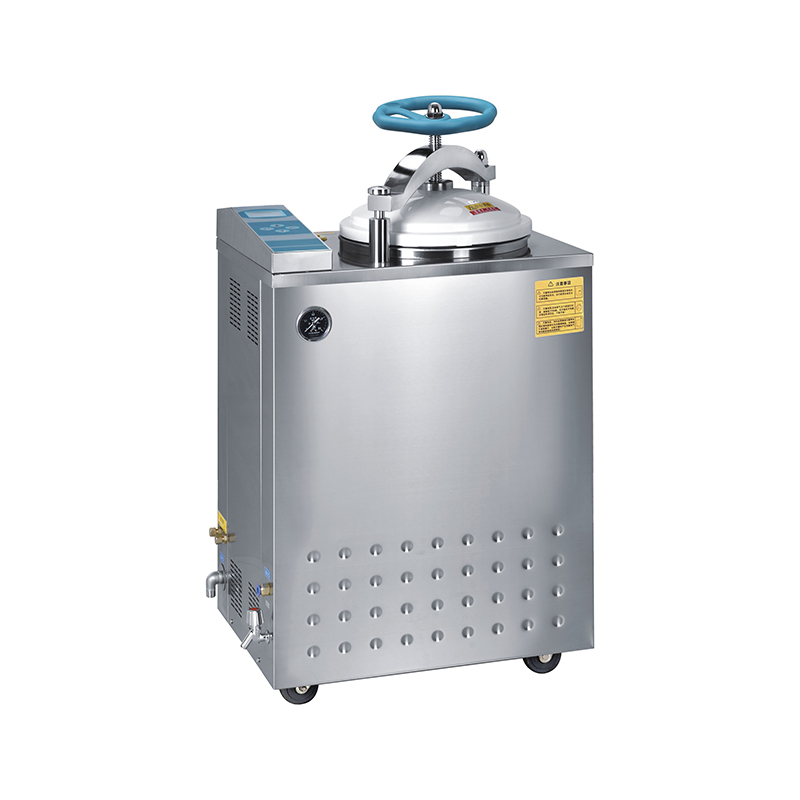
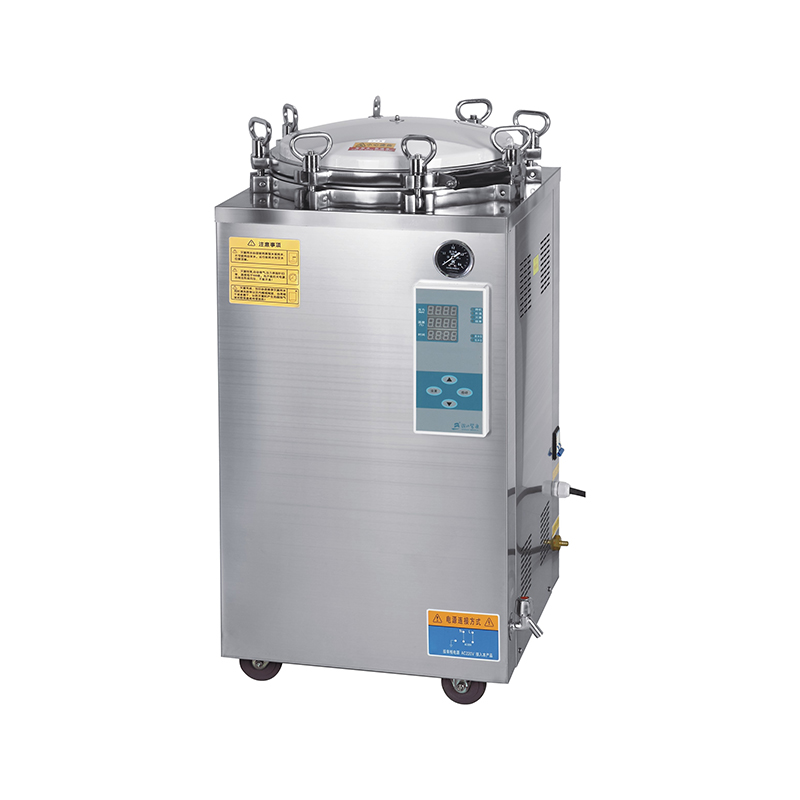
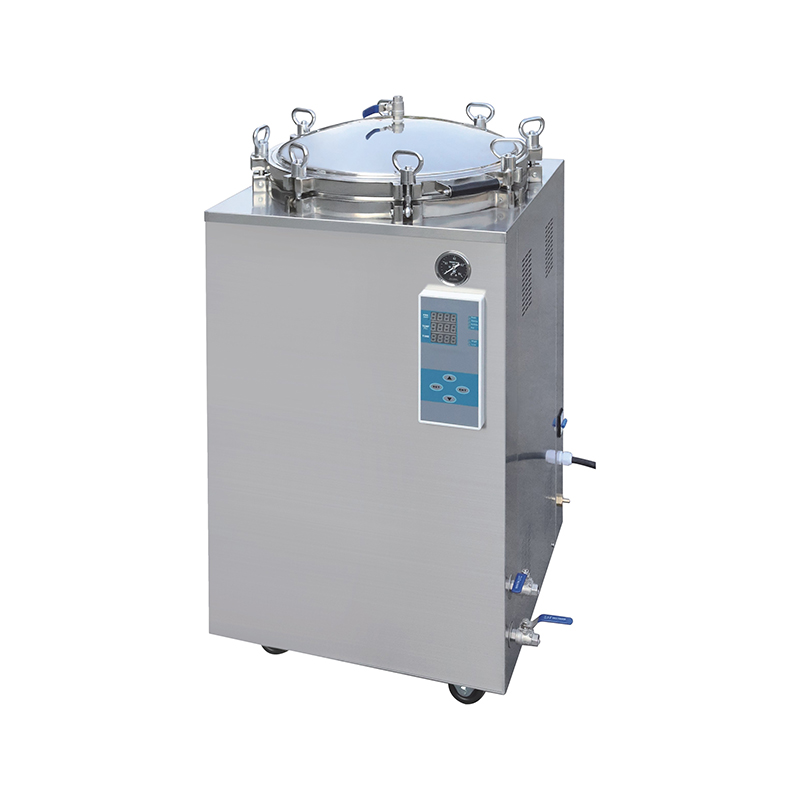
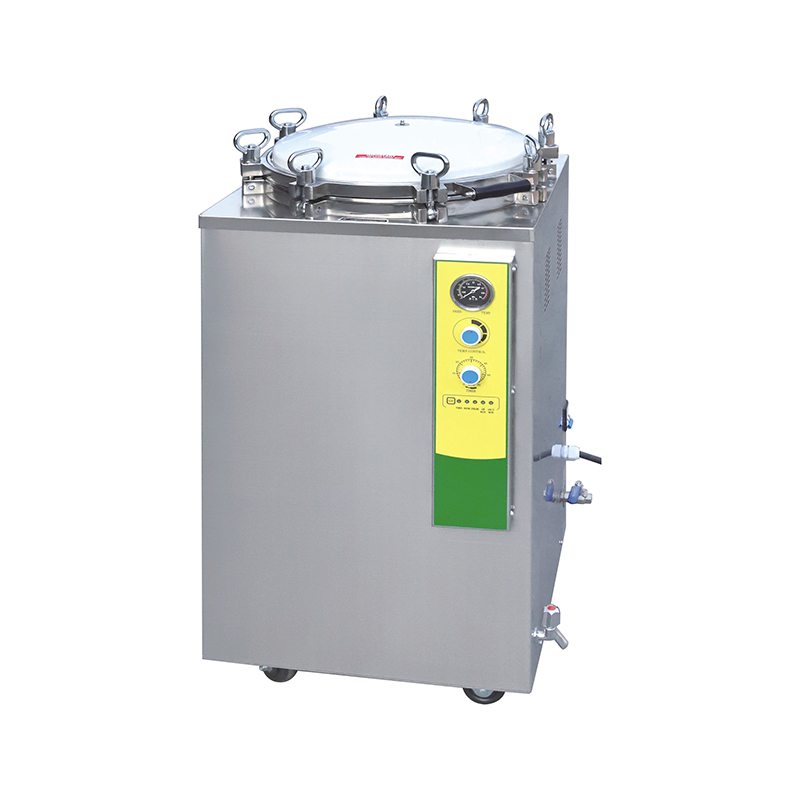
A vertical pulse vacuum steam sterilizer for reliable steam penetration illustrates the principle tangibly. Pre-vacuum cycles actively remove air pockets from hollow instruments and porous loads before steam injection. When the chamber is filled with high-quality saturated steam, the condensation front moves uniformly, guaranteeing a validated sterility assurance level (SAL). Without the correct steam type, even a fraction of a second of cold spot presence can invalidate the cycle.
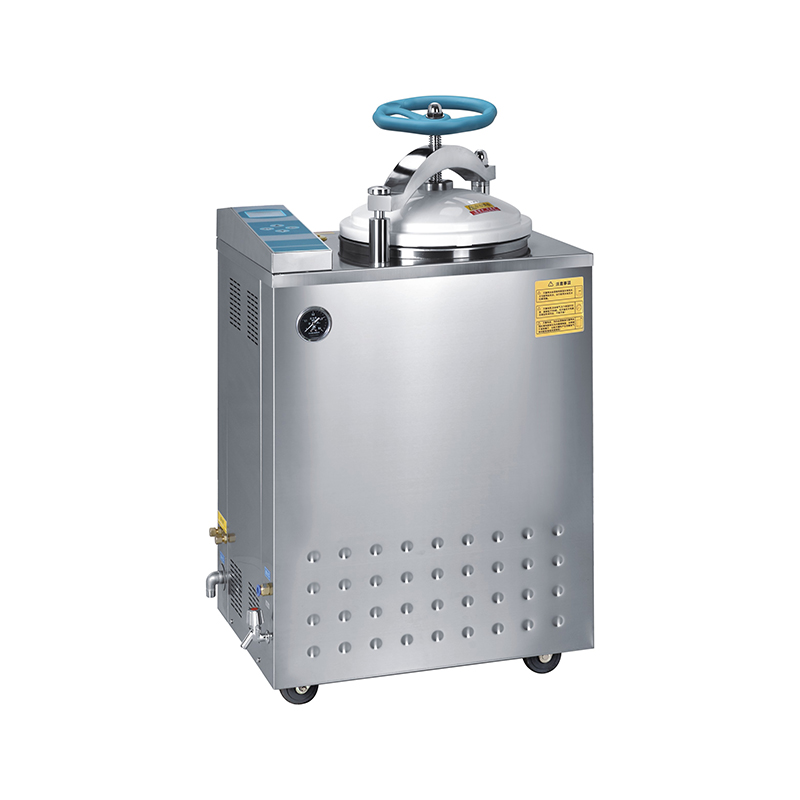 Wholesale Vertical Pulse Vacuum Steam Sterilizer Suppliers, OEM/ODM Company - JiJiangyin Binjiang Medical Equipment Co., Ltd. is China wholesale Vertical Pulse Vacuum Steam Sterilizer suppliers and OEM/ODM company, de...View Product →
Practical Implications for Autoclave Users
Facility teams can take several concrete steps to ensure the steam entering the chamber is truly saturated and free of excess condensate:
- Steam dryness validation: Use a steam quality test kit or a calorimeter at the point of entry. A dryness fraction consistently below 0.9 points to inadequate pipe insulation or excessive boiler carryover.
- Condensate management: Install properly sized steam traps and strainers as close to the autoclave as possible. Check traps quarterly—failed-open traps dump wet steam into the jacket and chamber.
- Water quality control: Feedwater with high total dissolved solids (TDS) promotes foaming and wet steam. Maintain TDS below the boiler manufacturer’s limit, and use a water softener or reverse osmosis system if source water is hard.
- Avoid superheat: Pressure-reducing valves can introduce superheat. A desuperheater or a simple water injection loop may be needed if downstream steam temperature exceeds saturation by more than 5°C.
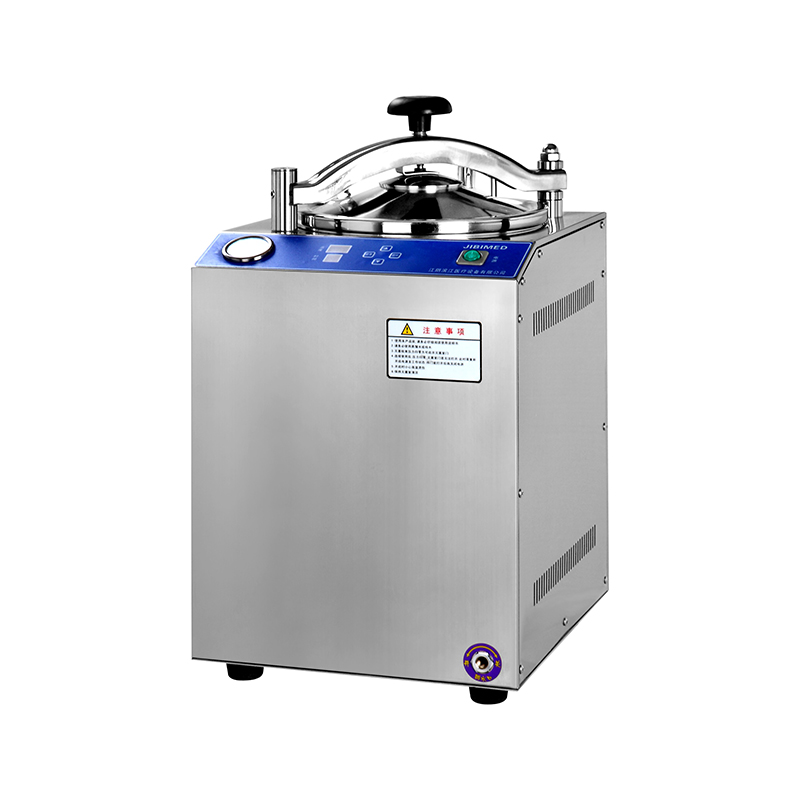
Operators should also assess how steam quality affects the long-term reliability of sterilizer components. Corrosion, gasket degradation, and chamber staining often trace back to chronic wet steam or aggressive condensate chemistry. For a deeper analysis of these interdependencies, see how steam quality affects sterilizer performance. Selecting equipment that integrates precise steam-conditioning features becomes a lifecycle decision, not merely an upfront cost comparison. As an example, our LCD automation vertical steam sterilizer includes real-time dryness monitoring logic that auto-aborts a cycle if steam conditions drift outside the validated envelope—turning the water vapor vs. steam distinction into an actively managed safety parameter.
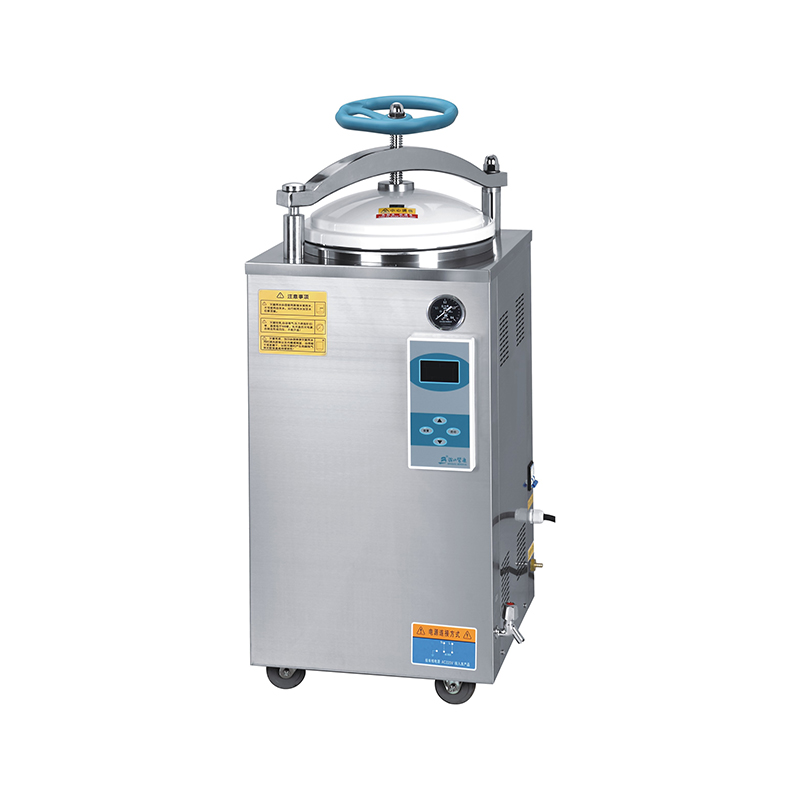 Wholesale LCD Display Automation Vertical Pressure Steam Sterilizer Suppliers, OJiangyin Binjiang Medical Equipment Co., Ltd. is China wholesale LCD Display Automation Vertical Pressure Steam Sterilizer suppliers and ...View Product →
Conclusion
Water vapor and steam share the same chemical identity but occupy different operational realities. Water vapor is the silent, transparent gas that fills ambient air; steam is an engineered high-energy fluid designed to deliver heat. When sterilization is the goal, only saturated steam—free of entrained liquid and superheat—reliably transfers the latent heat needed to achieve sterility. Misidentifying a visible mist as steam or neglecting dryness monitoring can produce wet packs, failed biological indicators, and costly re-sterilization cycles. The remedy is a disciplined quality-assurance routine that treats steam not as a generic utility but as a critical process fluid with measurable thermodynamic properties. By anchoring selection and operation around steam dryness, users align their autoclave performance with the physical reality that separates effective sterilization from a dangerous gamble.