English
 русский
 Français
 Español
 Indonesia
 Deutsch
 عربى
عربى 中文简体
中文简体


When Is a Sterilized Load Actually Ready for Release?
Posted by Admin | 14 Aug
Content
The machine beeps, the display reads "cycle complete," and the chamber door slides open without resistance. Most people take that as the green light: the program finished normally, so the load must be ready to go out.
In a Central Sterile Supply Department, "cycle complete" only means the sterilizer finished running its preset program. It does not mean the load is cleared for release. What actually determines whether a batch of instruments can be sent out is not the word "complete" on the screen, but everything that gets checked afterward — the monitoring results and the quality review that follow.
A Finished Cycle Doesn't Guarantee a Successful Sterilization
Pressure steam sterilization is a continuous, multi-stage process. From pre-vacuum and heating through the sterilization hold, exhaust, drying, and pressure equalization, every stage can be affected by equipment condition, steam quality, how the load was packed, which program was chosen, and how the operator handled the load.
A machine can run its program to completion without the process actually meeting sterilization requirements at every stage — and it's the sterilization technician's job to make that judgment call, not the machine's.
The Practical Handbook of Central Sterile Supply Sterilization is clear on this point: once a cycle ends, the technician's first task is to evaluate the process and the monitoring results before deciding whether the load can be released.
Five Checkpoints a Load Must Clear Before Release
Checkpoint 1: Do the Physical Parameters Check Out?
Start by reviewing the sterilizer's printed record against the actual run data. Key things to confirm:
- Whether the sterilization temperature reached the required setpoint
- Whether the hold time met the requirement
- Whether pressure changes matched the expected cycle profile
- Whether the pre-vacuum, sterilization, and drying stages ran in full
- Whether any alarms, abnormal readings, or interruptions occurred during the run
It isn't enough to see "complete" at the end — the technician has to know how the cycle got there. The handbook states that technicians should cross-check the printed record against the display and gauge readings, paying close attention to temperature, pressure, and time at each critical stage. If the physical monitoring doesn't pass, the entire load must not be released. A completed cycle is the outcome; the run data is the evidence.
Checkpoint 2: Does the Chemical Monitoring Pass?
Once the physical parameters check out, the chemical monitoring results need review — and that means more than glancing at whether the tape on the outside of a pack has changed color.
An external chemical indicator only confirms that a package was exposed to the sterilization process; a correct color change shows the pack went through the cycle, but it doesn't by itself prove the interior actually reached sterilizing conditions.
Technicians also need to check the results from the chemical process challenge device (chemical PCD) run with that cycle. If the indicator inside the PCD didn't pass, it means the cycle failed a built-in challenge test, and the load cannot be released as-is.
In short, chemical monitoring isn't just "did the tape change color" — it's a three-part check: the external indicator, the chemical PCD, and the internal indicator inside each pack.
Checkpoint 3: Do the Biological Indicators Meet Requirements?
Biological monitoring challenges the cycle with a defined population of bacterial spores to verify whether sterilization actually achieved its intended effect — it's the most direct measure of sterilization quality.
When a load requires biological monitoring before release, the results must come back compliant before that load is cleared — no exceptions, especially for implant loads. Clinical urgency is never a reason to skip the monitoring and release steps.
If a biological indicator comes back positive, the response can't stop at dealing with that one indicator, and it isn't enough to simply re-sterilize the load in question. The handbook specifies that a positive biological result means the entire load must not be released, and the facility must follow its reporting, investigation, and recall procedures.
Checkpoint 4: Is the Package Itself Intact?
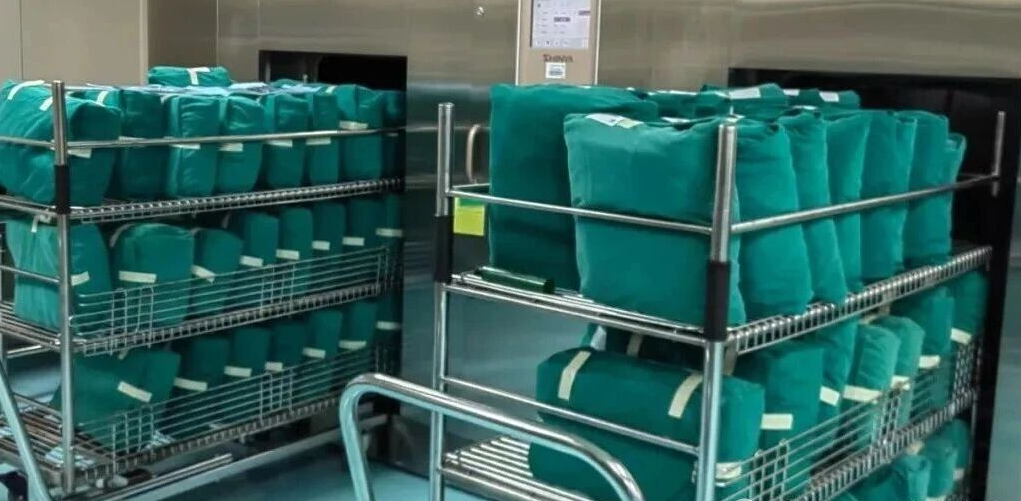
Passing parameters and passing monitoring still isn't the end of the check. After unloading, every pack needs a visual inspection for:
- Wet packs
- Loose or damaged packaging
- Incomplete seals
- Non-compliant external indicators
- Unclear or incomplete labeling
- Visible contamination
- Detached or missing labels
Wet packs deserve special attention. Even when every sterilization parameter checks out, a package showing visible moisture, water marks, or dampness cannot be released as a sterile item, because moisture can compromise the sterile barrier and give outside microorganisms a path into the package. Being sterilized isn't the same thing as being fit to use as a sterile item.
Checkpoint 5: Are the Review and Documentation Complete?
Releasing a sterilized load is never a matter of one technician glancing at it and calling it good from experience. Departmental protocol requires a formal review confirming that the monitoring results, package condition, and records are all complete, with sign-off from the staff involved.
The handbook is explicit: only after physical monitoring, chemical monitoring, biological monitoring, and package quality have all been confirmed compliant — and verified through a two-person review — can a load be judged compliant and released. That second check isn't a formality tacked on for show; it's the last safeguard standing between the load and the point of use.
A Sterilization Technician Is More Than the Person Who Presses Start
Operating a sterilizer looks like a hands-on-the-machine job, but the real skill being tested is judgment. The equipment can run itself through a program, but it can't decide:
- Whether a given set of parameters is actually acceptable
- Whether the monitoring results genuinely pass
- Whether a wet pack can go out the door
- Whether an anomaly warrants stopping the process
- Whether a load needs to be reprocessed
A sterilization technician is both the operator of the equipment and the frontline judge — and the person accountable — for sterilization quality. The professionalism of the job shows up after the cycle ends, in every check, every observation, and every careful release decision that follows.
[Forward statement]
Copyright belongs to the original author. We pay tribute to the original author! If the media or individual does not want their content to be reproduced, you can contact us and we will delete it immediately! Thanks!