English
 русский
 Français
 Español
 Indonesia
 Deutsch
 عربى
عربى 中文简体
中文简体


Sterility Indicators: Types, How They Work & How to Choose the Right One
Posted by Admin | 13 May
Content
A failed sterilization cycle that goes undetected isn't just a process error — it's a patient safety event waiting to happen. That's the fundamental reason sterility indicators exist: they give you verifiable, documented proof that your sterilization process actually worked, not just that the machine ran a cycle. Physical parameters like temperature and pressure tell you the equipment performed as set. Sterility indicators tell you whether the load was actually sterilized.
This guide breaks down the three categories of sterility indicators — biological, chemical, and physical — explains how each works, and shows you how to match the right indicator to your sterilization method and equipment.
What Is a Sterility Indicator?
A sterility indicator (also called a sterility monitor) is a test system used to verify that sterilization conditions have been achieved within a load. The term covers a broad family of devices: from paper strips carrying bacterial spores to color-changing chemical tapes to electronic data loggers recording temperature and pressure curves.
No single indicator type tells the whole story on its own. Regulatory bodies and sterilization standards universally recommend using a combination of all three categories — biological, chemical, and physical — for robust, defensible sterility assurance. Each layer catches what the others might miss.
Biological Indicators: The Gold Standard
Biological indicators (BIs) are the only indicator type that directly measures the lethality of the sterilization process. They work by introducing a known population of highly resistant bacterial spores into the load; after the cycle completes, incubation reveals whether any spores survived. No growth means the process achieved the required log reduction. It is the most direct evidence of effective sterilization available.
The spore species selected for a BI must be matched to the sterilization method, because resistance profiles vary significantly across sterilizing agents:
| Sterilization Method | Indicator Organism |
|---|---|
| Moist heat (autoclave, 121°C) | Geobacillus stearothermophilus (ATCC 7953) |
| Moist heat (autoclave, 134°C) | Geobacillus stearothermophilus |
| Dry heat (160°C) | Bacillus subtilis var. niger |
| Ethylene oxide (EO) | Bacillus subtilis var. niger (ATCC 9372) |
| Vaporized hydrogen peroxide (VH₂O₂) | Geobacillus stearothermophilus |
| Ionizing radiation | Bacillus pumilus |
Modern BIs increasingly come in self-contained formats, where the spore carrier and culture medium are integrated in a single sealed unit. After the cycle, the user simply activates the device (crushing the internal ampoule) and incubates it. This eliminates the aseptic handling required with traditional spore strips and dramatically reduces contamination risk during post-process culture. For high-throughput sterile processing departments, rapid-readout BIs — capable of returning results in as little as 5–20 minutes — are now widely used in place of the traditional 24–48-hour incubation period.
Understanding the steam temperature requirements for effective sterilization is essential context for selecting the correct BI and interpreting its results correctly.
Chemical Indicators: Fast Visual Feedback
Chemical indicators (CIs) undergo a measurable physical or chemical change — typically a color shift — when exposed to one or more sterilization parameters. They do not prove sterility the way BIs do, but they provide immediate, cycle-by-cycle confirmation that critical conditions were present. For routine load monitoring, CIs are indispensable.
ISO 11140-1 classifies chemical indicators into six types based on what they measure and where they're used:
- Type 1 — Process Indicators: Applied to the outside of packs to distinguish processed from unprocessed items. Autoclave tape is the classic example — it changes from beige to black stripes upon exposure to steam. It confirms the item entered a cycle; it does not confirm adequate conditions were reached inside.
- Type 2 — Specific-Use Indicators: Designed for a defined test, such as the Bowie-Dick test for pre-vacuum steam sterilizers, which checks for air removal and steam penetration performance.
- Type 3 — Single-Variable Indicators: Respond to a single critical variable (e.g., temperature). Witness tubes containing benzoic acid (melting point 121°C) or sulfur (115°C) fall into this category. A methylene blue dye is sometimes added to make the melt visible at a glance.
- Type 4 — Multi-Variable Indicators: Respond to two or more critical parameters. More reliable than single-variable types, these are widely used as in-pack indicators.
- Type 5 — Integrating Indicators: React to all critical variables across the entire sterilization cycle, with performance correlated to that of a biological indicator. They are sometimes called "BI-equivalent" CIs and are the most rigorous chemical indicator available.
- Type 6 — Emulating Indicators: Calibrated to respond to all critical variables for a specific sterilization cycle. Because they are cycle-specific, they provide the tightest performance correlation of any CI type.
For EO sterilization, the Royce sachet is a specialized CI: ethylene oxide penetrates a polyethylene bag containing ink and magnesium chloride, triggering a yellow-to-purple color shift as ethylene chlorohydrin forms. Radiation sterilization uses chemical dosimeters — radiosensitive materials in a plastic carrier that shift from yellow to red as absorbed dose accumulates. For more detail on the full ethylene oxide sterilization process and its validation requirements, see our dedicated guide.
Physical Indicators: The First Line of Monitoring
Physical indicators are the instruments and records built into the sterilizer itself: thermocouples, pressure transducers, and the electronic or paper-based cycle logs they generate. Modern autoclaves use microprocessor-controlled systems that record time, temperature, and pressure throughout every cycle, producing a batch record that serves as the primary process documentation.
For each sterilizer and load configuration, a Master Process Record (MPR) is established during validation. Each subsequent cycle's physical record is compared against the MPR. Deviations — a temperature drop mid-cycle, incomplete pressure hold, a pump failure in a pre-vacuum system — are captured immediately, before the load is released.
The limitation of physical indicators is that they measure conditions at the sensor locations, which may not represent the coldest or most challenging point within a dense or complex load. This is why physical data alone is insufficient for sterility release — it must be supplemented by chemical and biological indicator results. That said, physical monitoring is the fastest-responding system and the most practical first check after every cycle.
How to Match Indicators to Your Sterilization Method
Indicator selection is not one-size-fits-all. The sterilizing agent, equipment type, load characteristics, and regulatory context all influence which combination of indicators is appropriate. The table below provides a practical starting framework:
| Sterilization Method | Biological Indicator Organism | Recommended CI Type | Physical Monitoring |
|---|---|---|---|
| Steam (gravity displacement, 121°C) | G. stearothermophilus | Type 5 or Type 6 | Temperature + pressure recorder |
| Steam (pre-vacuum / pulse vacuum, 134°C) | G. stearothermophilus | Type 5 or Type 6 + Bowie-Dick (Type 2) | Temperature + pressure + vacuum level |
| Ethylene oxide | B. subtilis var. niger | Royce sachet / EO-specific CI | Gas concentration + humidity + temperature |
| Dry heat (160°C) | B. subtilis var. niger | Type 3 or Type 4 | Temperature recorder (MPR) |
| Vaporized hydrogen peroxide (VH₂O₂) | G. stearothermophilus | VH₂O₂-specific CI (Type 5 or 6) | Concentration + temperature + exposure time |
For high-throughput decontamination centers and CSSD environments, indicator placement within the load matters as much as indicator selection. Placing BIs and CIs at the geometric center of the load and within the most challenging load items (hollow devices, wrapped trays with high density) ensures the monitoring system reflects actual worst-case conditions. See our guidance on high-temperature sterilization loading requirements and decontamination center best practices for a detailed walkthrough.
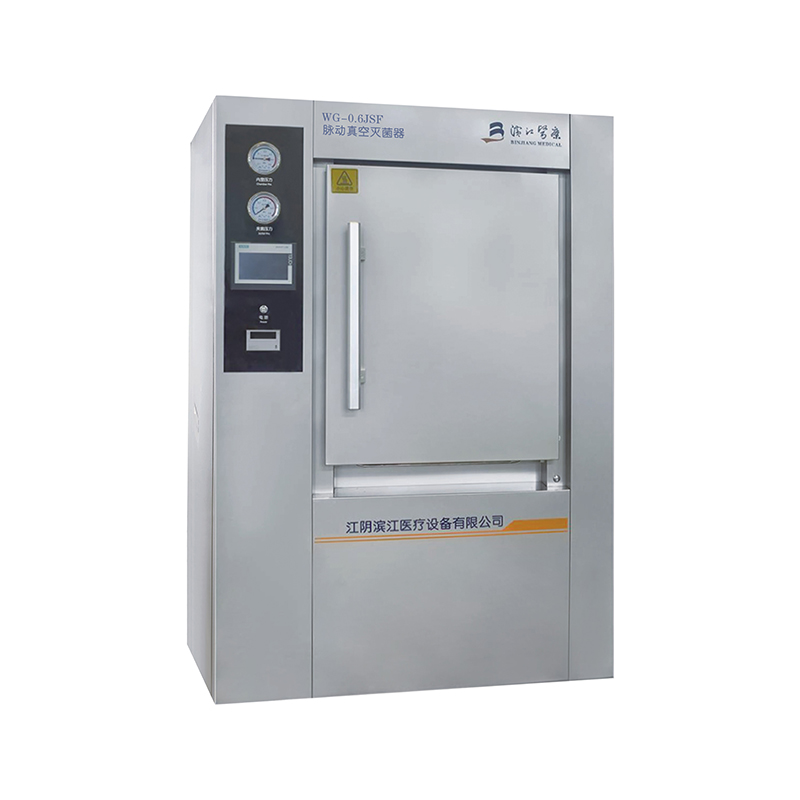
Equipment type also shapes indicator frequency. Horizontal pulse vacuum steam sterilizers used in large-scale hospital CSSD operations typically require BI testing at every load for implantable devices and at least weekly for other loads, per AAMI ST79 and EN ISO 17665 guidelines.
Regulatory Standards: ISO 11138 and FDA Requirements
The global regulatory framework for sterility indicators is anchored by two standard families. For biological indicators, the ISO 11138 series — General Requirements for Biological Indicator Systems establishes production, labelling, test method, and performance requirements. Its individual parts address specific sterilization methods: Part 2 covers EO, Part 3 covers moist heat, Part 4 covers dry heat, and Part 5 covers low-temperature steam and formaldehyde. For chemical indicators, ISO 11140-1 and its subsequent parts set equivalent requirements.
In the United States, the FDA regulates biological indicators as Class II medical devices under 21 CFR Part 880. Manufacturers seeking market clearance for BIs must submit a 510(k) premarket notification demonstrating substantial equivalence to a predicate device, including resistance test data generated under the methods described in FDA guidance on BI submissions. Facilities using these indicators are expected to follow manufacturer instructions and document indicator results as part of their quality management system.
For pharmaceutical manufacturing, sterility indicator use intersects with FDA 21 CFR Part 211 (Current Good Manufacturing Practice) and the EU GMP Annex 1 requirements for the manufacture of sterile medicinal products. Both frameworks treat BI testing as a mandatory element of sterilization cycle validation, not an optional quality enhancement.
Key compliance principle: a passing BI result is a necessary condition for sterility release of implantable or high-risk devices, but it is not sufficient on its own. Physical records and CI results must also be reviewed and archived as part of the complete batch documentation package.
Conclusion
Choosing the right sterility indicator — and using it consistently — is what separates a defensible sterility assurance program from one that relies on assumption. Biological indicators give you the most direct evidence of lethality. Chemical indicators give you immediate cycle-by-cycle visual feedback. Physical records give you the continuous parametric trace that ties everything together.
Getting the combination right starts with understanding your sterilization equipment and the load it processes. If your operation runs table-top steam sterilizers for clinical or dental applications, the indicator protocol will differ from that of a large horizontal autoclave in a hospital CSSD. Match your monitoring system to your process — and review it whenever equipment, load type, or cycle parameters change.